For many Australian households, the electricity bill can feel like a bit of a mystery. Rates, tariffs, time-of-use charges and industry-specific terminology make it hard to know exactly what you’re paying for, let alone how to reduce it. But once you understand how your energy is being charged, you’ll be in a much better position to take control of your power usage and your power bills.
At Springers Solar, we believe knowledge is power. When you understand how peak and off-peak electricity works, you unlock a clear, practical path to smarter energy use, lower bills, and better long-term energy choices for your home.
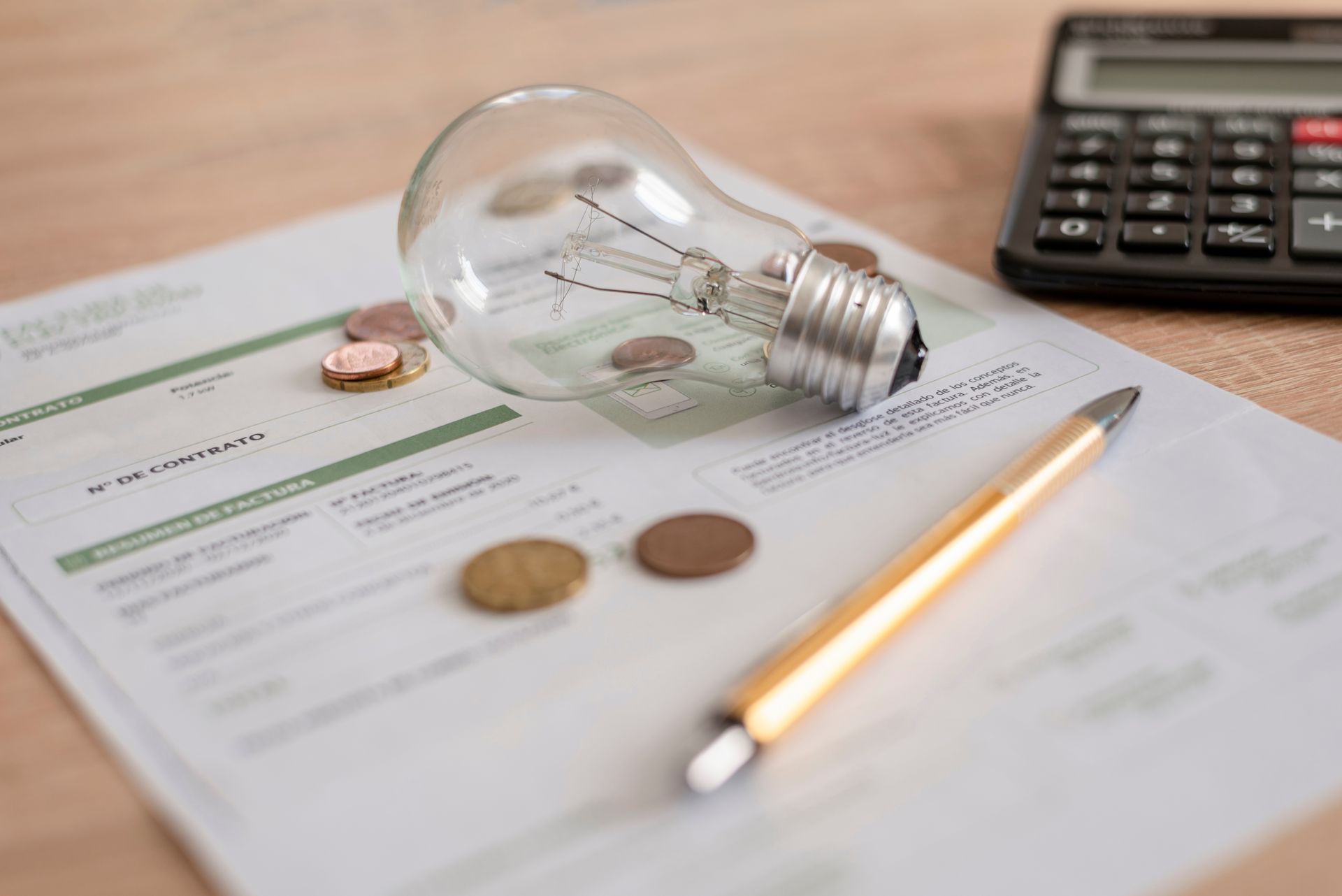
Understanding your electricity bill charges
Your electricity bill mostly shows you how much energy you’re using and how much it costs you, but the hidden info you can extract from your bill is when you’re using certain energy.
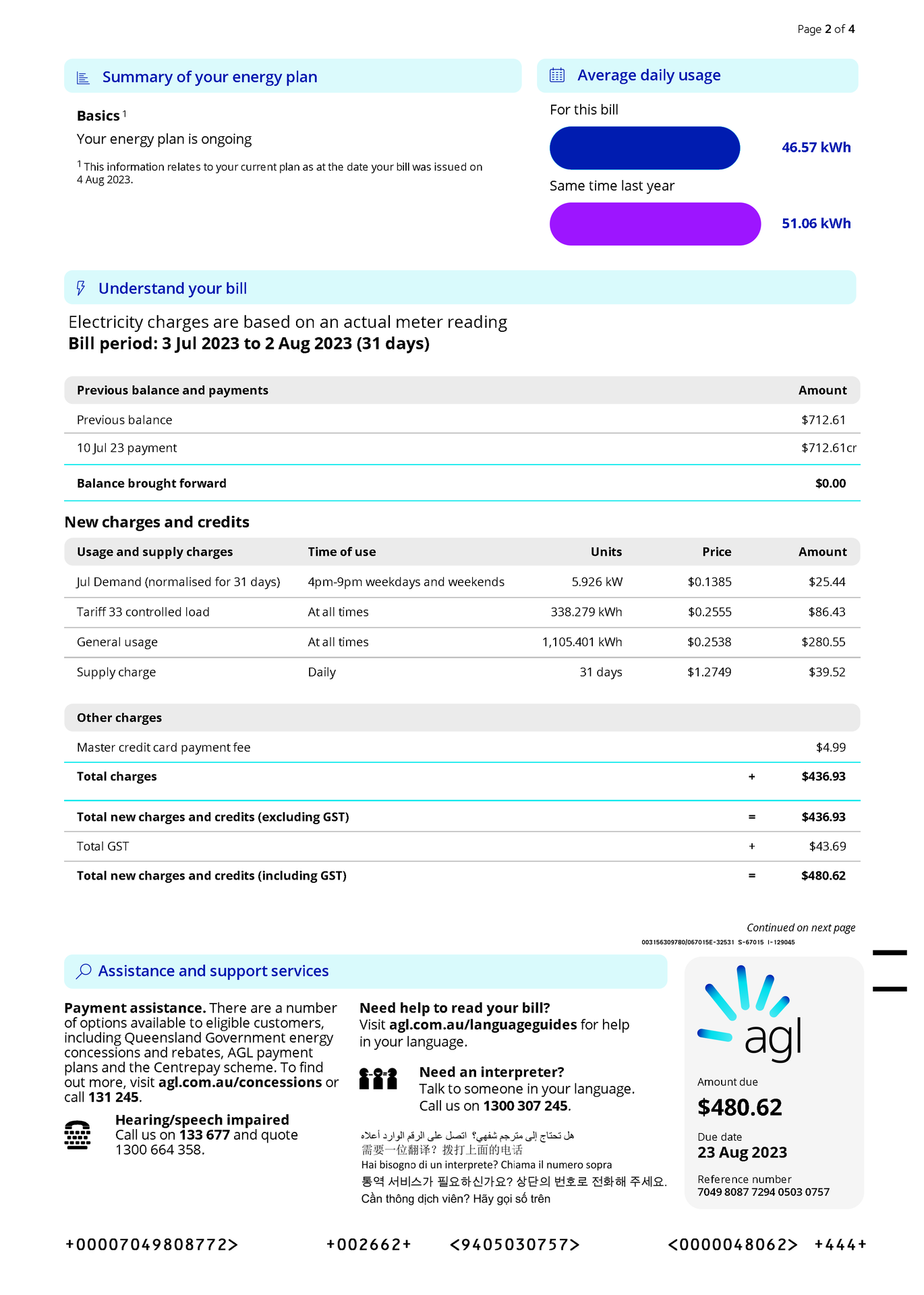
Most Australians households have a flat tariff where you pay the same rate no matter what time you use your energy. This is often coupled with a controlled load tariff that can be associated with specific, high-energy use appliances that have their own wiring, separate from the rest of the home’s electricity, such as pool pumps and electric hot water systems. The controlled load will only have power available at off-peak times, and as a result, you are charged a lower fixed flat rate.
Example electricity bill 1:
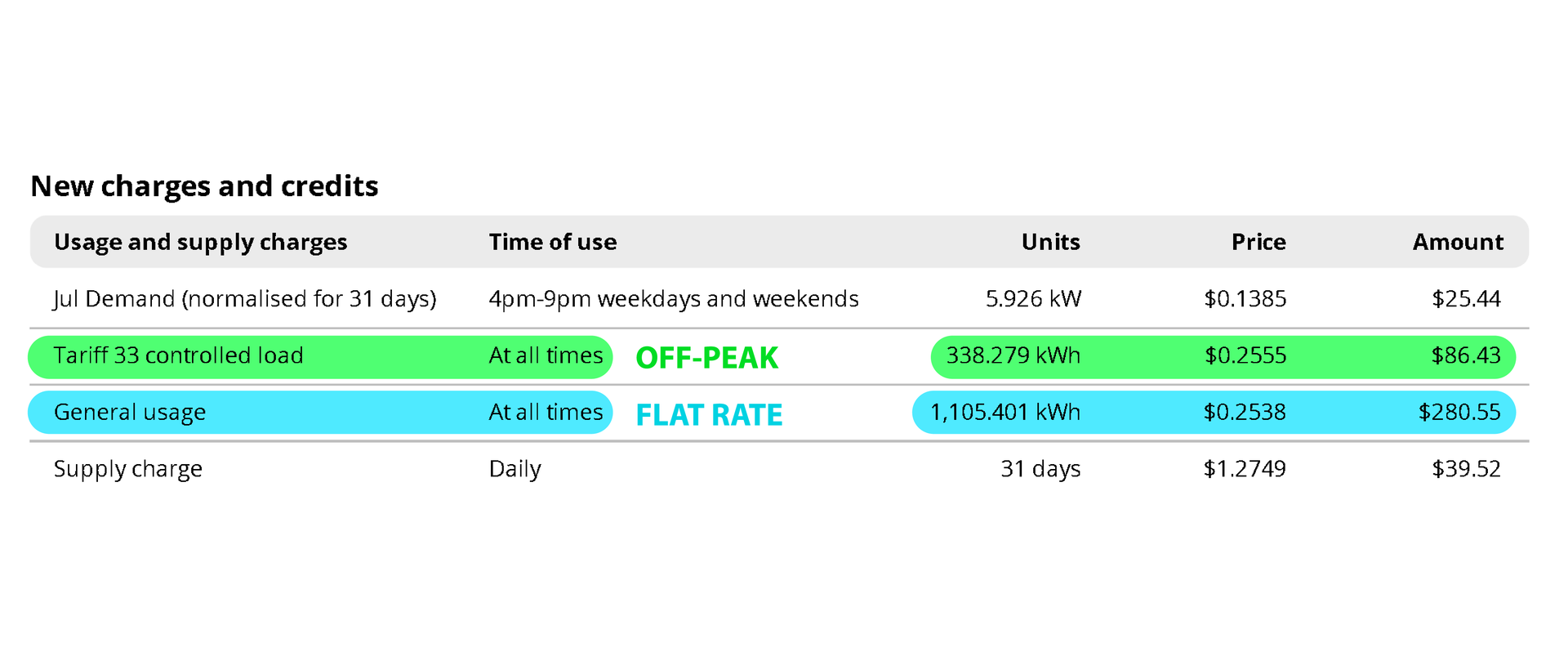
Some households, though, have the option of choosing a tariff structure that includes different rates depending on the time of day, often referred to as time-of-use pricing. So, this means that you’ll be charged more for using energy during certain periods than others.
If you’ve chosen a Time-of-Use plan, unfortunately, your bill won’t show you exactly what you were charged for each hour of the day, so here’s where you need to know what to look for and what it translates to.
Energy providers often use industry terminology on your bill, so if you don’t know what to look for, it can just seem like more irrelevant jargon. Among many others, some terms that you’re likely to come across are peak, off-peak and demand charges. If you’re on a Time-of-Use plan, this is what you’re looking for.
Example electricity bill 2:
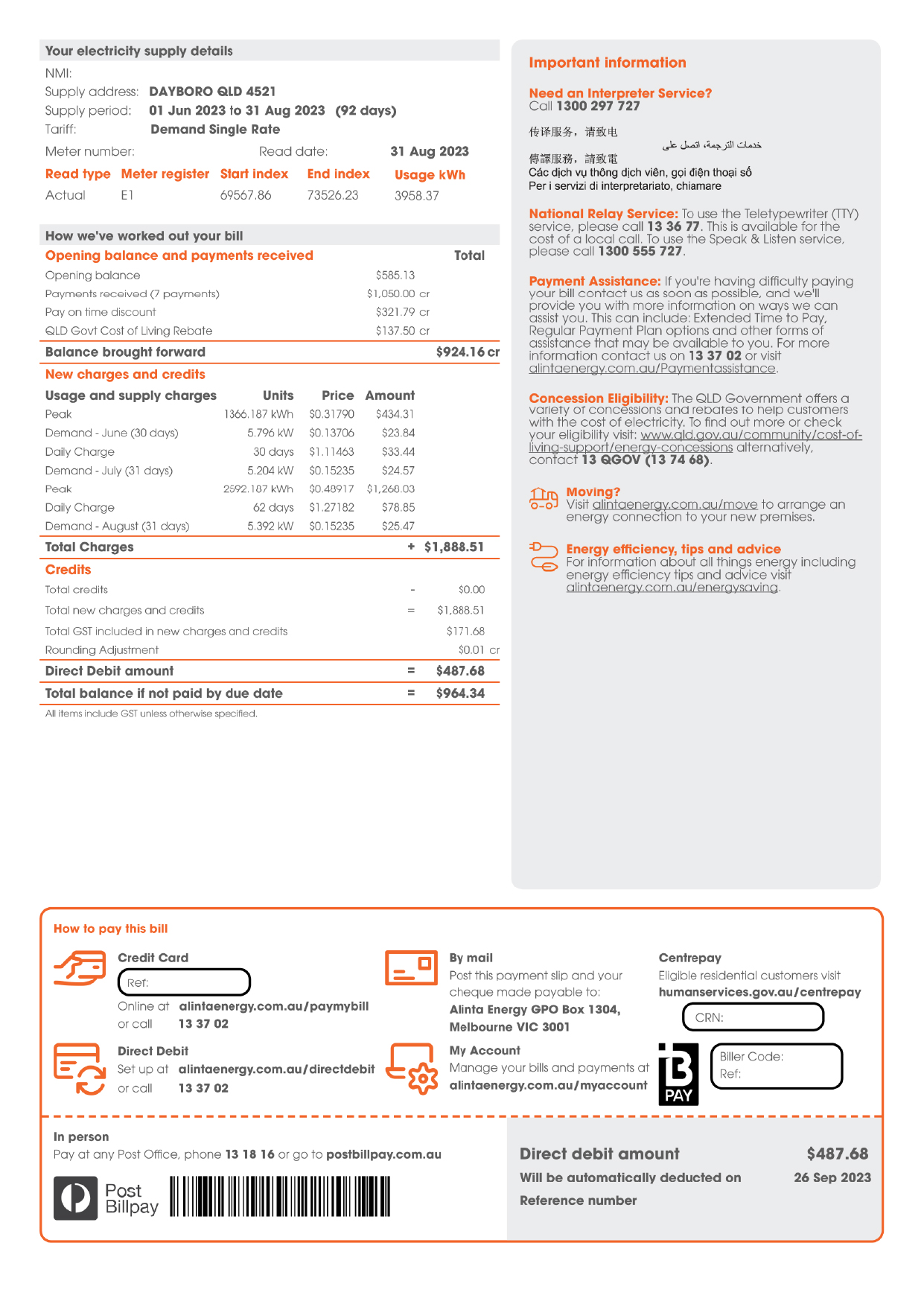
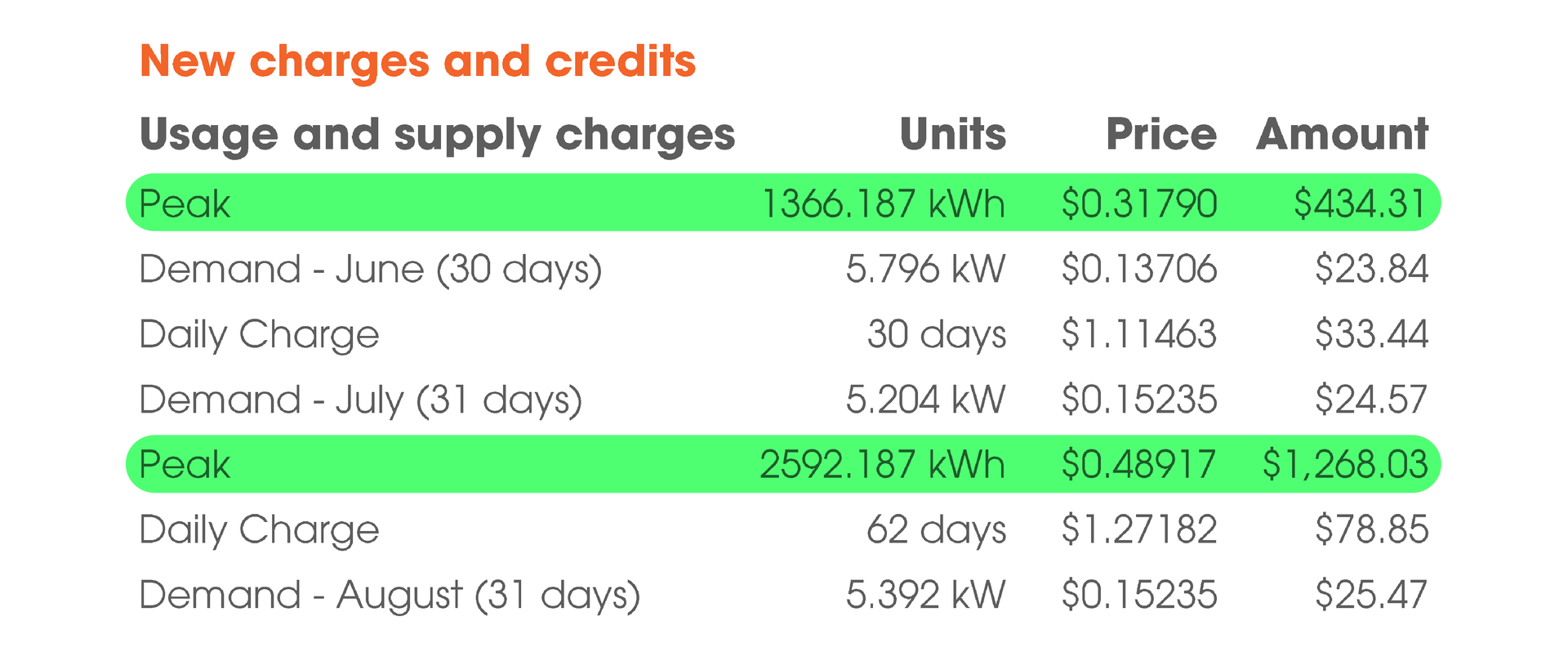
‘Peak’ and/or ‘Off-Peak’ are going to be the charges that you can use to help determine how much energy you’re using at certain times… so let’s look at these closer.
Read more: Electricity Bill Tariffs Explained
What is Peak power?
Peak power is the term used to describe the time of day when the demand for electricity is at its highest. This is typically in the afternoon to early evening, when most people are home and using multiple energy-intensive appliances at the same time, such as air conditioning/heating systems, cooking appliances, hot water systems, entertainment devices and even EV chargers.
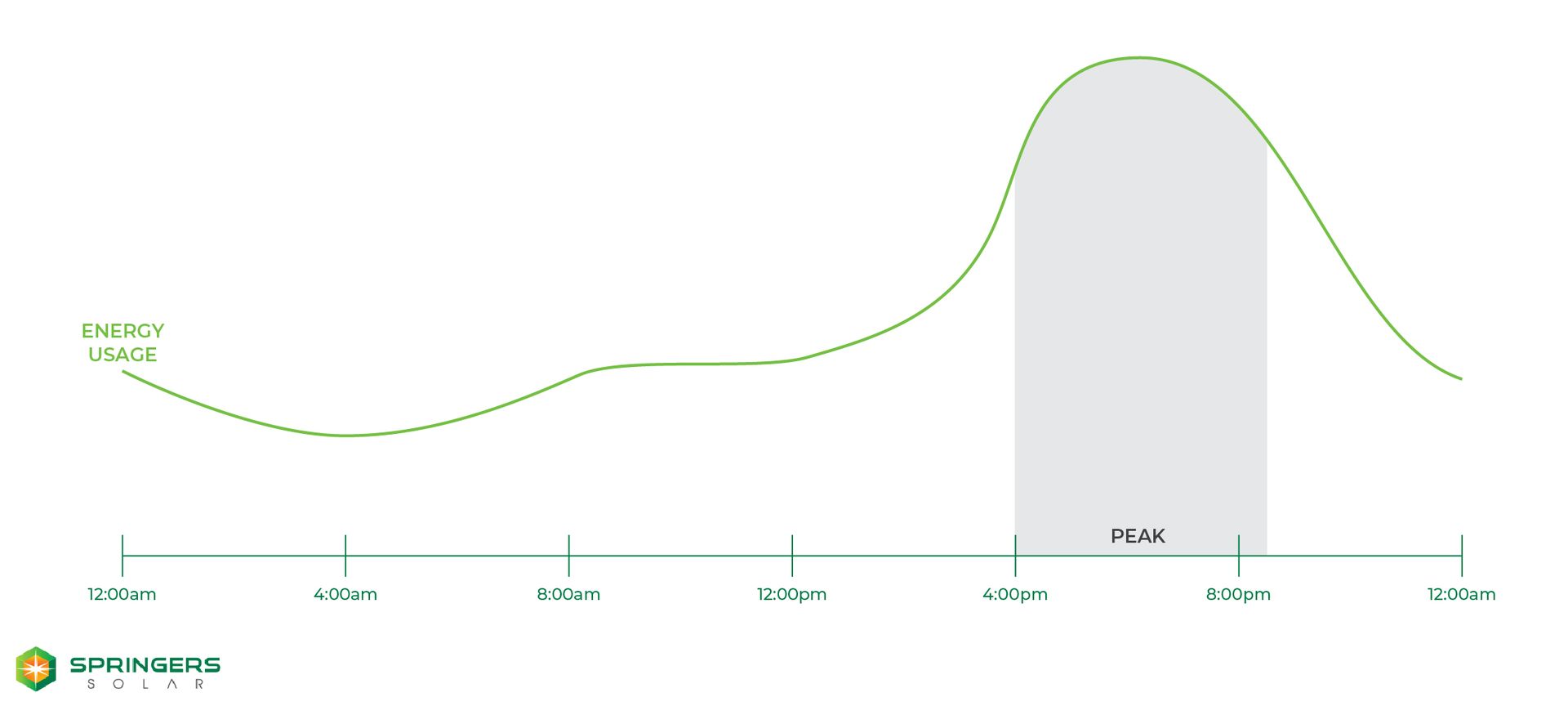
All of this energy drawn adds up, and it puts a significant strain on the grid. Because of this, energy retailers usually charge a higher rate for electricity during peak periods.
Each retailer and each Australian state will have a slightly different definition of when ‘Peak’ hours fall, but the general consensus is that mid-afternoon to early evening on weekdays is when demand for electricity is the highest. In QLD, our peak electricity period is 4pm - 9pm during weekdays.
What is Off-Peak power?
Off-peak power is the opposite - it refers to the time of day when the demand for electricity is not at its highest. This is when fewer households are drawing large amounts of power, the grid is under far less pressure, and energy demand is more stable.
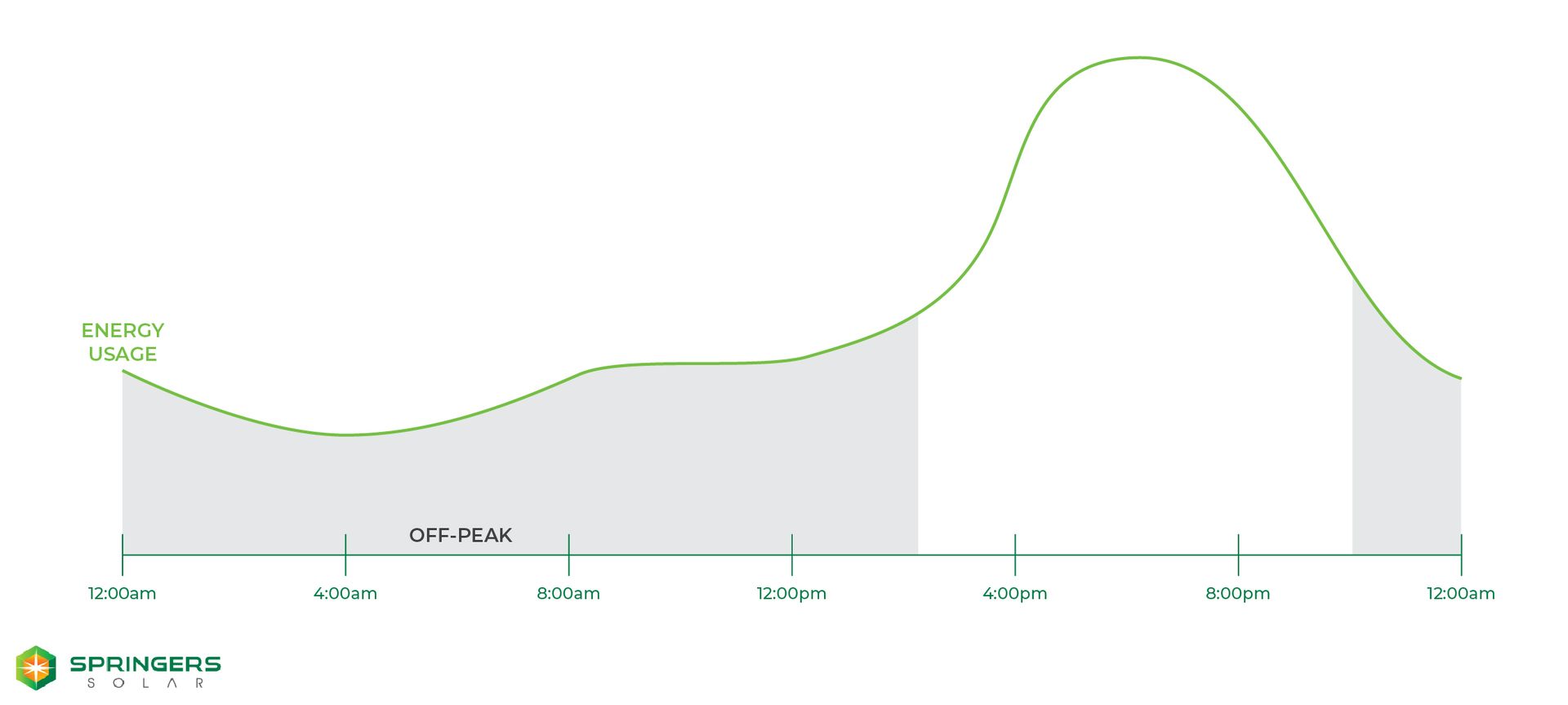
Because there are a lot fewer households requiring large draws of electricity during this time, energy retailers often offer lower electricity rates during off-peak periods. This pricing structure is designed to encourage households to shift their energy use away from peak times and into these quieter periods to help balance the grid and reduce overall demand pressure.
Shoulder periods
Just like most large data graphs, the demand for energy falls into a general bell curve. You have your ‘off-peak’ hours, then the curve rises leading towards the ‘peak’ hours, and then drops back off again to ‘off-peak’ hours.
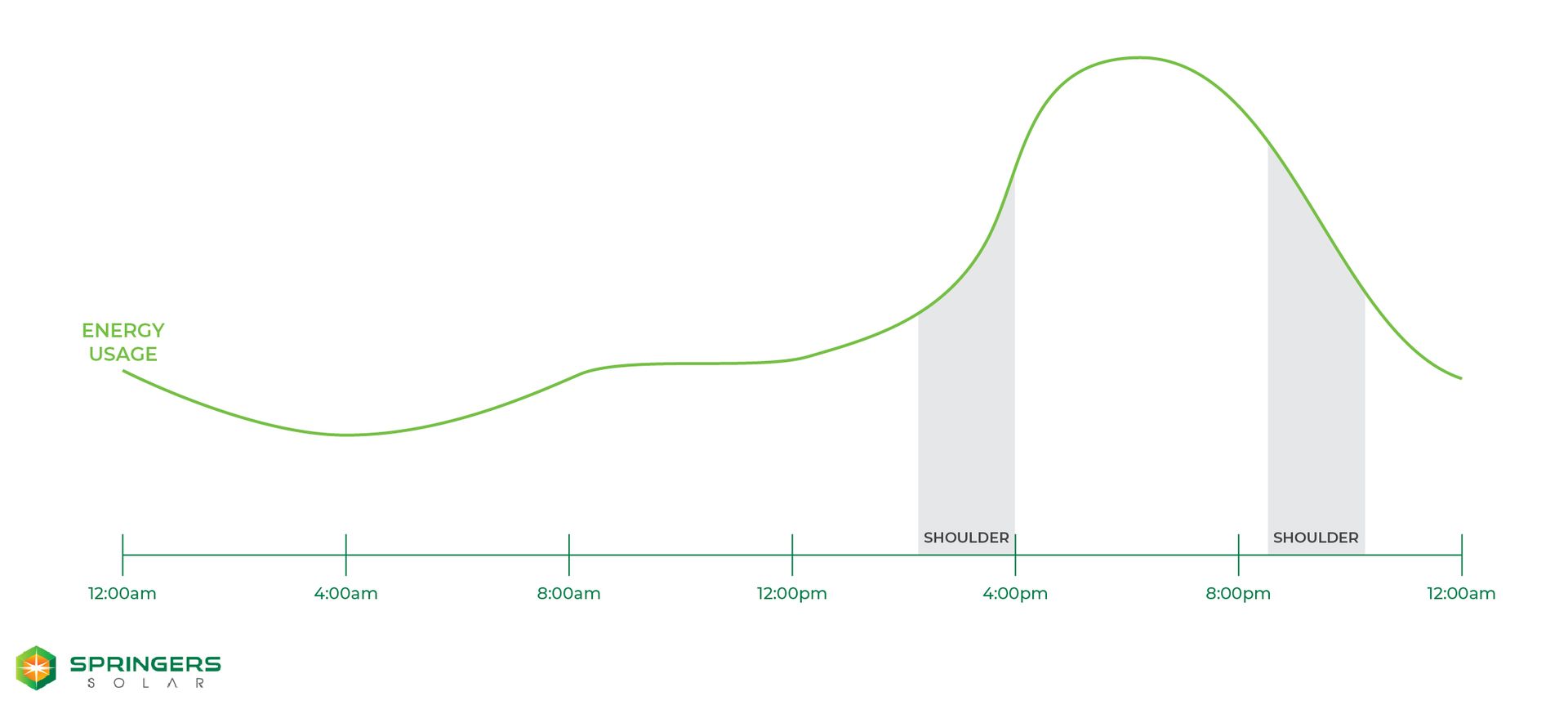
The small window of time during which the demand curve is rising or falling on either side of the ‘peak’ is what we call the ‘Shoulder’. This time is usually when some households are drawing a decent amount of energy, but there’s not necessarily a strain on the grid yet. Not every retailer includes the shoulder in their pricing, but some do - so it’s worth at least noting.
Why do Peak and Off-Peak electricity periods exist in Australia?
Peak and off-peak pricing isn’t just about cost; it’s also about the stability and sustainability of the energy network. When too much electricity is demanded at once, the grid comes under significant pressure. This can lead to:
- Increased risk of blackouts
- Network instability
- The need for expensive infrastructure upgrades
To prevent this, energy retailers use time-based pricing to spread demand more evenly across the day. Higher peak rates discourage heavy usage at high-demand times, while cheaper off-peak rates incentivise households to shift consumption to lower-demand periods.
It’s a balancing act that homeowners can use to their advantage once they understand how it works. This is where load shifting comes into play.
Load shifting - how to maximise the benefits of both
Load shifting is simply the process of moving your electricity usage from high-cost, high-demand periods to lower-cost, lower-demand times. And it’s one of the most effective ways to reduce your power bills, especially when paired with a solar or solar and battery system.
Here are practical, real-world ways to start load shifting at home:
- Wait until the morning to run your washing machine or dryer, so they operate during the day
- Use timers on heating and cooling systems so your home is comfortable before you arrive home
- Set pool pumps and cleaners to run during daylight hours
- Turn hot water systems on in the morning and switch them off in the evening
- Use delay-start functions on dishwashers to run during the day
- Save energy-intensive tasks for weekends when you’re home to monitor usage
- Charge power banks and devices during the day, then use them at night
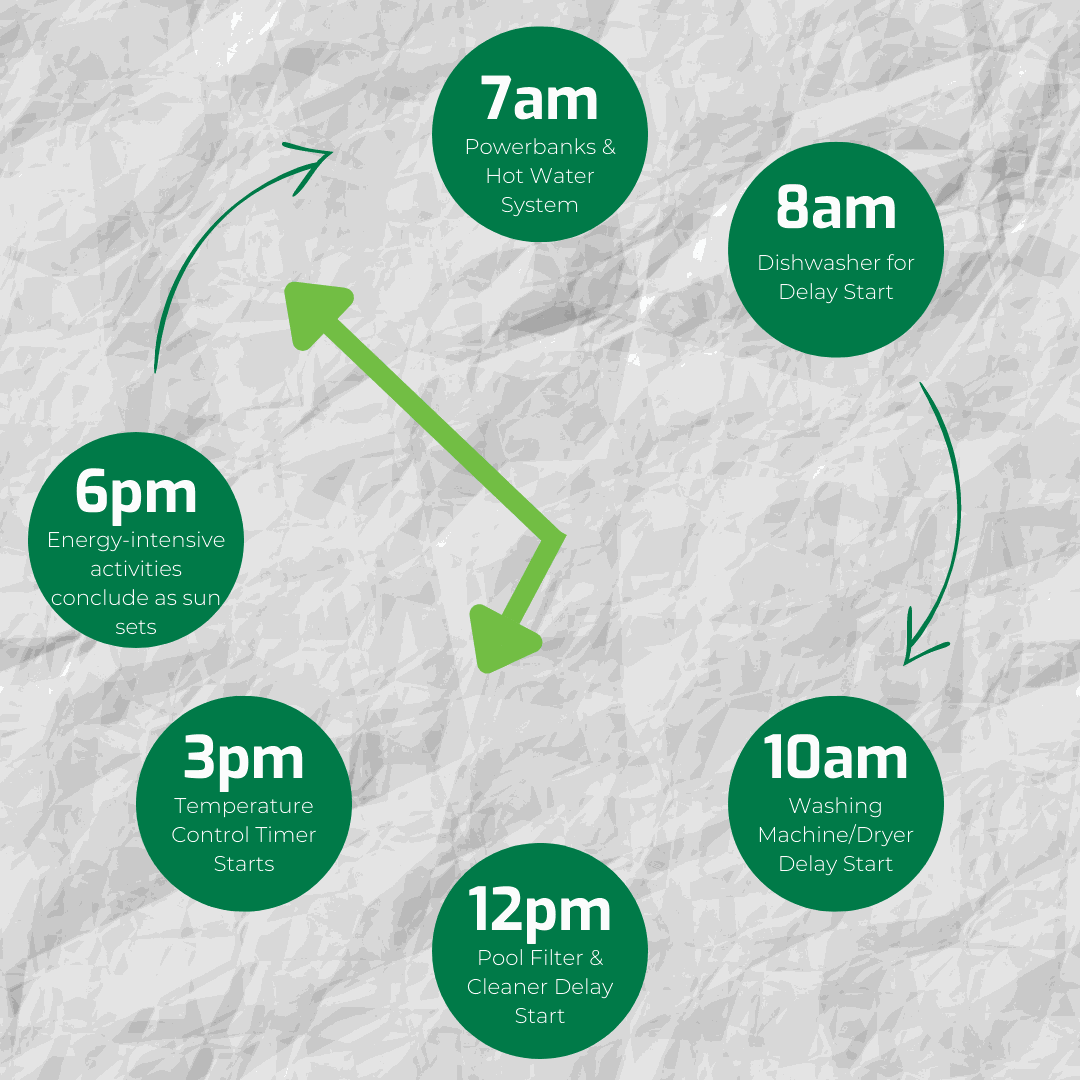
Now, not every high-energy appliance can be shifted, but that’s okay. You don’t need to move everything to see a difference. Shifting just your high-consumption appliances can make a noticeable impact on your electricity costs.
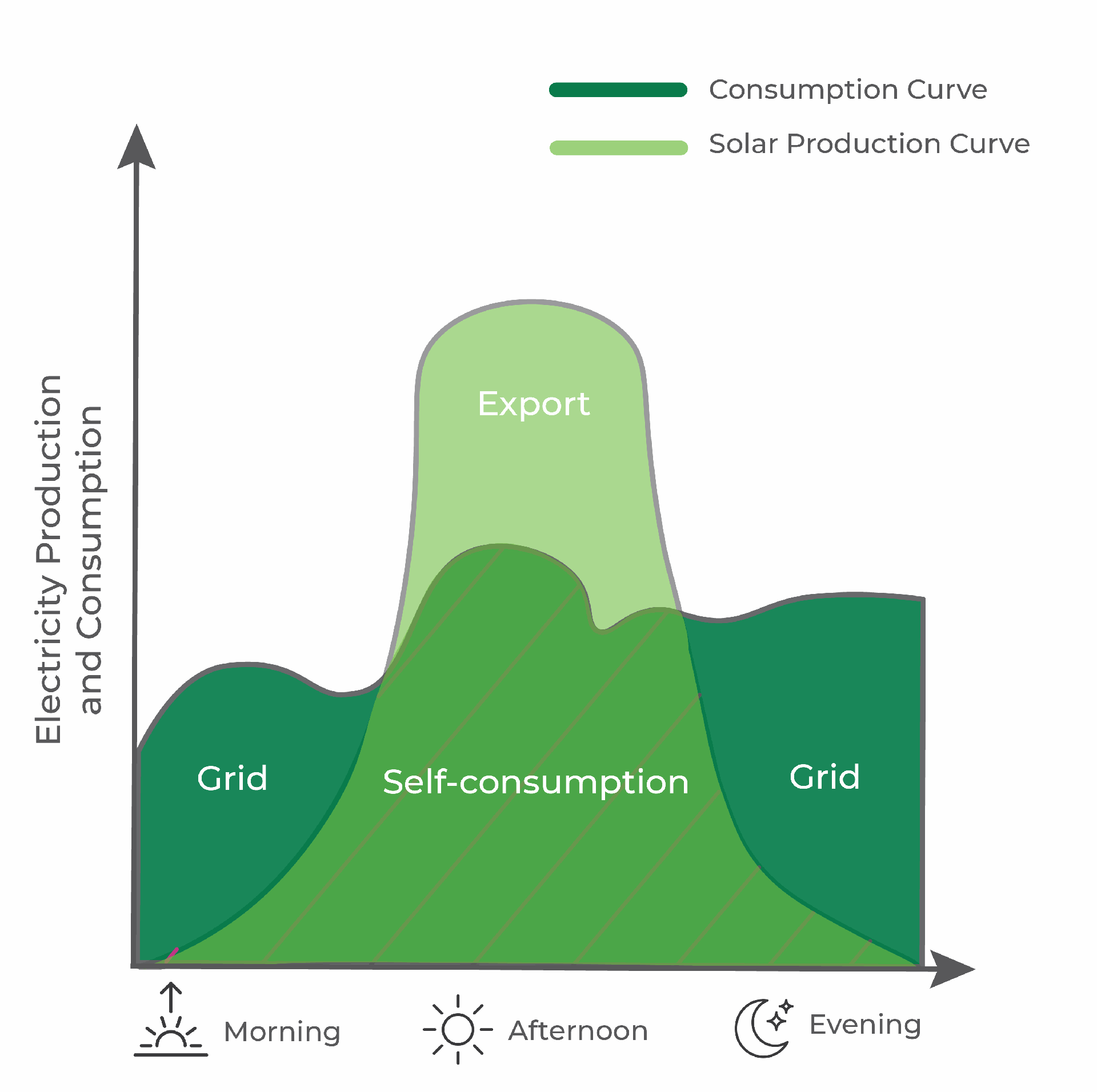
This is also where smart energy systems really shine. With solar, you’re generating your own energy during the day, which is exactly when load shifting is most effective. With a battery system, you can store that solar energy and use it during peak periods, reducing your reliance on expensive grid power.
It’s not just about producing energy, it’s about using it smarter. A well-designed solar and battery system allows you to:
- Power your home during the day with solar
- Store excess energy for peak periods
- Reduce peak grid usage
- Cut electricity bills
- Increase energy independence
- Protect your home against rising energy costs
Read more: How Much Will You Save On Your Power Bill With Solar?
Peak and off-peak power isn’t just industry jargon; it’s a powerful tool for households who want to take control of their energy use. When you understand how your electricity is charged, you can make smarter decisions, shift your usage strategically, and unlock real savings without sacrificing comfort or lifestyle.
At Springers Solar, we don’t just install systems, we design long-term energy solutions that help Australian households save money, reduce reliance on the grid, and build a more sustainable future.
If you’re ready to take control of your energy bills, understanding peak vs off-peak power is the first step, and smarter energy choices are the next.
Springers Solar | Queensland's Most Experienced Solar Installer
Springers Solar provides quality components with proven performance, backed by industry-leading warranties and dedicated after-sales support. Thousands of satisfied customers over 24 years of operation make Springers Solar one of the most established and experienced solar companies in Australia.
Springers Solar have received multiple awards for design and installation and is a certified/preferred installer for a large range of solar panel, inverter, and solar battery manufacturers, including Sungrow, Tesla, Sigenergy, and SolarEdge.
Our dedicated in-house team of electrical engineers, project managers, solar PV designers, solar installers, and electricians work closely with you before, during, and long after your project is completed. Springers Solar offers an industry-leading 10-year workmanship warranty, which is a testament to our qualified staff and offers you outstanding peace of mind.
Peak vs Off-Peak Power in Australia