On 5 August 2026, Climate Change and Energy Minister Chris Bowen announced a game-changing update to Australia's Small-scale Renewable Energy Scheme (SRES).
Set to take effect from 1 October 2026 (pending final regulations), this policy change increases the eligible system capacity for upfront small-scale solar rebates tenfold - raising the ceiling from 100kW to 1MW.
If you manage a medium-sized enterprise, agricultural facility, warehouse, shopping precinct, school, or hospital, this expansion directly targets your business.
While Australia has led the world in household solar adoption, our commercial sector has lagged behind at just 5.6GW, mostly made up of smaller sub-100kW arrays. Federal policymakers have dubbed medium-sized commercial roofs the "missing middle": operations with high daytime power needs and large roof spaces that were previously locked out of upfront small-scale rebates (or forced to undersize).
By expanding the SRES framework, the government aims to slash the upfront capital cost of commercial solar installations by roughly 20%. That means faster payback periods, easier business cases for your board or finance team, and long-term protection against inflating electricity prices.
Plus, to help ensure projects aren't stuck waiting around, the government has requested the Australian Energy Market Commission (AEMC) to streamline network grid connection processes so power companies approve commercial systems faster and more consistently.
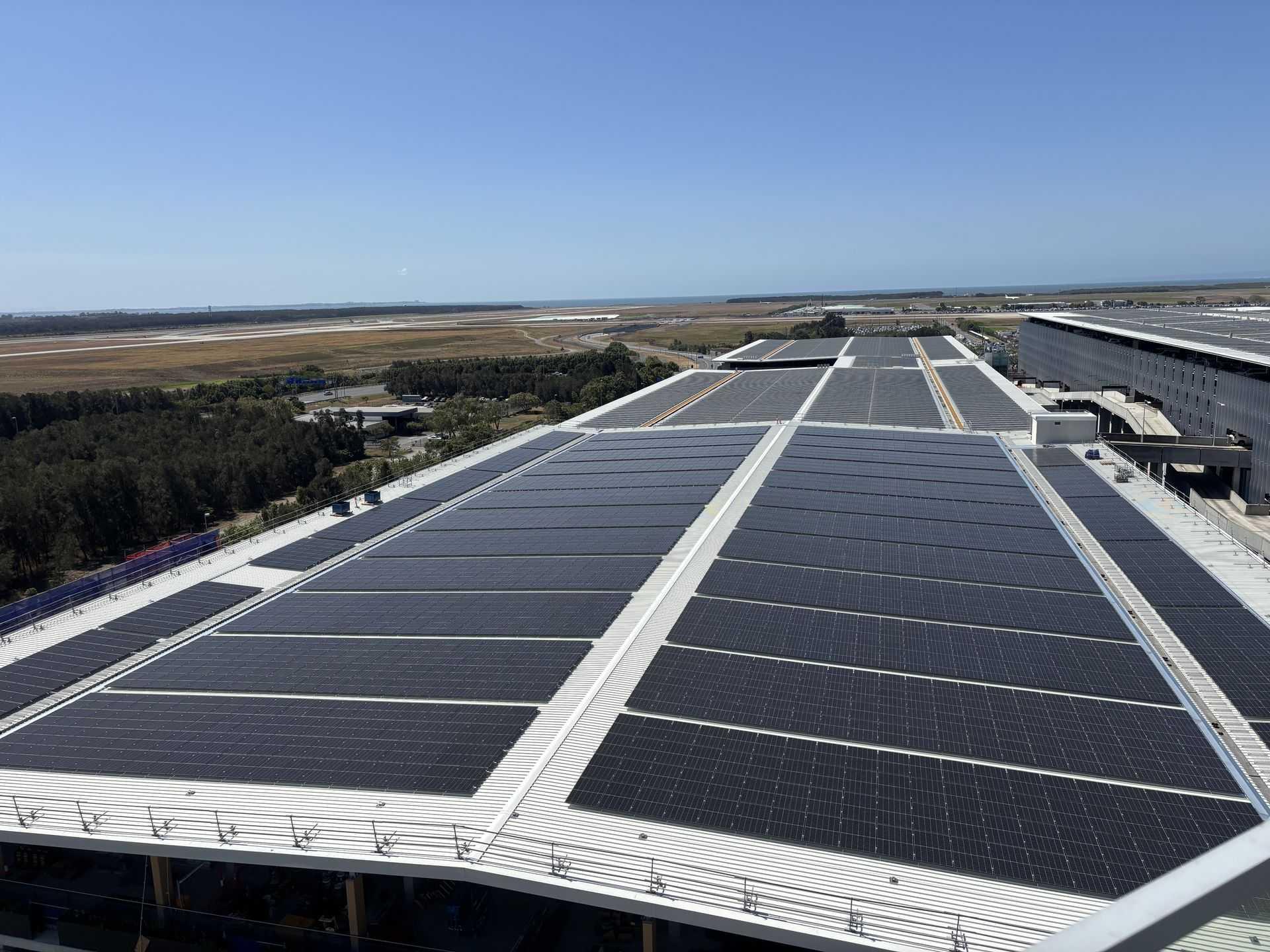
View case study: 1.2MW solar installation at Brisbane Airport
How the rebate works: STCs vs. LGCs made simple
Understanding how solar incentives work in Australia comes down to understanding the virtual certificate market created under the federal SRES.
When an eligible system is installed, it creates Small-scale Technology Certificates (STCs) based on its expected clean energy generation over a set deeming period.
The beauty of the SRES for your business is that you don't have to fill out complex government grant paperwork or wait months for a payout. Your accredited installer claims the STCs on your behalf and applies the value as an instant point-of-sale discount directly on your system quote.
Previously, if your business wanted to build a system larger than 100kW, you were pushed out of the SRES and into the Large-scale Renewable Energy Target (LRET). Under the LRET, systems receive Large-scale Generation Certificates (LGCs), which offer zero upfront financial discount.
Instead, your company had to register as an accredited power station with the Clean Energy Regulator, install specialised grid metering, and manually track and trade certificates every year over the asset's lifetime (yes... tedious).
Because of this extra admin and cash-flow friction, many business owners intentionally downsized their planned installations to 100kW just to get the upfront STC discount.
Feature | Historical SRES Framework | Expanded SRES Framework (From Oct 2026) |
System Capacity Limit | Capped at 100kW | Expanded up to 1,000kW (1MW) |
Target Implementation Date | In place since 2011 | From 1 October 2026 |
Upfront Cost Reduction | Capped benefits above 100kW | Average ~20% discount up to 1MW |
Financial Mechanism | Point-of-sale STC discount | Point-of-sale STC discount up to 1MW |
Admin Requirements | LGC power station registration required over 100kW | Simple STC assignment directly on installer quote |
Scheme Expiry Date | Phasing out annually to 1 January 2031 | Phasing out annually to 1 January 2031 |
In 2026, baseline STCs deliver an upfront savings value of approximately $248 per installed kilowatt.
Keep in mind that SRES rules dictate a slight annual reduction in certificate creation every January until the program officially finished on 1 January 2031. Getting your project underway earlier means securing higher certificate counts and larger upfront savings.
Real-World System Scaling and Projected Savings
Here is how upfront rebates and ongoing annual power bill savings stack up across different building and business sizes under the expanded 1MW scheme:
Enterprise Profile & Building Type | Estimated Roof Space | System Size (kW) | Project Upfront SRES Discount | Annual Generation | Estimated Annual Bill Savings |
Small Warehouse / Light Industrial | ~1,050m2 | 150 kW | +$13,000 extra above old cap | ~207 MWh / year | $45,000 / year |
Medium Enterprise / Retail Hub | ~1,750m2 | 250 kW | ~$68,000 total (+$39,000 above old cap) | ~345 MWh / year | $50,000 to $75,000 / year |
Supermarket / Large Retailer | ~3,500m2 | 500 kW | ~$136,000 total (+$104,000 above old cap) | ~690 MWh / year | $150,000 / year |
Industrial Facility / Cold Storage | ~6,000m2 | 850 kW | Scaled STC Volume | ~1,173 MWh / year | $175,000 / year |
Logistics Hub / Shopping Centre | ~9,000m2 - 11,000m2 | 1,000 kW (1 MW) | +$234,000 extra above old cap | ~1,380 MWh / year | $300,000 / year |

View case study: 232kW solar installation at Wide Bay Hospital
Commercial Design Options and Engineering Standards
To receive a quality commercial solar installations in Australia, your SAA-accredited solar installer must:
- Complete a site inspection prior to quoting
- Inspect switchboards and sub-boards
- Complete engineering checks
Technical Parameter | Commercial Installation Standard | Why It Matters For Your Business |
PV Module Selection | 465W+ commercial solar panels | Commercial roofs can accommodate larger solar panel sizes. Using bigger panels means fewer total panels to install, reducing mounting hardware and labour costs. |
Inverter Architecture | Chained string inverters | Experienced commercial installers generally prefer chaining multiple string inverters to provide design flexibility across different roof angles. |
Battery Readiness | Commercial hybrid inverters | Commercial hybrid inverters are capable of delivering high performance PV output and future-proofs your business should you decide to install batteries to soak up excess solar generation. |
Structural Integrity | RPEQ-certified structural engineering audit | Commercial arrays add physical weight and wind loading to your building. Site physical inspections and structural engineering sign-offs are essential safety steps before work begins. |
What this means for Australia's grid and your industry
Putting unused commercial roofs to work doesn't just lower your bills - it strengthens Australia's energy network. Generating power right on top of commercial buildings satisfies heavy daytime operational demand locally without requiring expensive new transmission lines.
Research from Smart Energy Council shows that Australia's commercial and industrial roof space holds enough untapped solar capacity to match the output of 10 of the nation's largest coal-fired power stations.
By taking pressure off the energy grid during peak hours, commercial rooftop generation helps lower wholesale power prices across the board.
Operational considerations when planning for solar
While the SRES expansion is a huge step forward, business owners still need to navigate a few key operational considerations when planning a major solar upgrade.
Network Grid Approvals
Commercial systems larger than 100kW require grid connection approval from local Distribution Network Service Providers (DNSPs). Currently, 71% of commercial solar developers highlight slow network sign-offs as a key hurdle, with approval times sometimes stretching to five months instead of standard 10-business day timelines.
To fix this bottleneck, the government has asked the AEMC to step in and streamline grid connection rules. But, this may be something to take into consideration when planning your timeline.
Navigating Landlord-Tenant Leases
Split incentives between property owners and commercial tenants remain a common challenge, noted by 75% of industry respondents. Building owners usually pay the capital cost for solar upgrades, but tenants reap the rewards of lower electricity bills.
The best way to avoid potential headaches is to adopt standardised commercial solar lease addendums or power purchase structures that let landlords and tenants split costs and financial bill savings fairly.
Feed-in Tariffs and Battery Storage (BESS) Integration
With so much solar generating during peak sunny hours, midday wholesale power prices regularly drop to 3 cents per kilowatt-hour (kWh) or lower, while evening peak rates can exceed 40 cents per kWh.
In response, energy retailers have reduced feed-in tariffs (FiTs) from around ~7 cents per kWh down to ~2 cents per kWh.
Therefore, some businesses are choosing to install commercial battery energy storage systems to soak up excess solar generation from the middle of the day to store for evening and overnight usage.
For businesses who remain operational into the evening or overnight, such as cold storage, entertainment and hospitality services, or hospitals, installing batteries (or at least preparing for batteries by choosing hybrid inverters) is a forward-thinking measure.
Read more: When is it time to replace your solar and/or battery system?
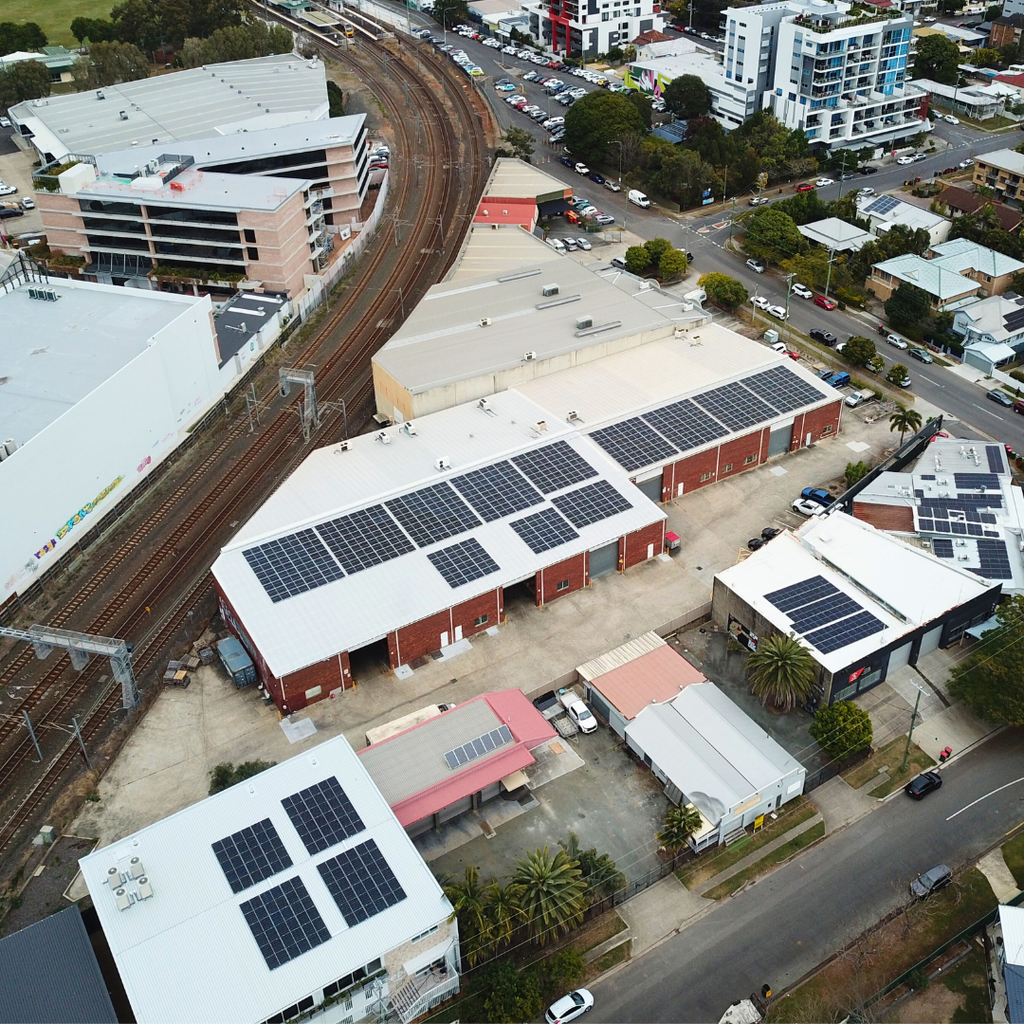
View case study: 190kW solar installation at a refrigerated commercial warehouse
Your action plan to maximise the 1MW solar incentive
The most critical decision you'll have to make is choosing which commercial solar installer you partner with.
Your commercial installer will work closely with you to understand your business's metering and load profile to maximise financial return. They will also audit your electricity bills, tariffs, and other commercial load components to verify which bill line-items will be reduced by on-site solar generation.
Read more: Electricity bill tariffs explained: Commercial demand
Choose a commercial solar installer with an evidence-based portfolio of commercial installations and outcomes. The solar installer should have at least two decades worth of experience (operating since, not just combined leadership experience), a dedicated projects division, a dedicated after-sales service and support division, and they must avoid using subcontractors. Choose a 100% in-house installer for guaranteed quality control over workmanship and warranty support.
In preparation for a solar installation, you should also:
- Align your lease agreements early: If you lease your premises, work with your tenants to establish a clear cost-sharing agreement before signing components contracts.
- Complete legal & engineering due diligence: Commercial solar is a high-value asset. Always ensure your contracts and plans undergo legal review and that a qualified structural engineer inspects your roof before installation (a good solar installer will offer RPEQ engineering reports as part of their contract).
- Time your project to maximise STC values: Because SRES certificate creation factors step down every January leading up to the scheme's completion on 1 January 2031, kicking off your design and grid approval process early ensures you secure maximise upfront rebate value.
Springers Solar | Queensland's Most Experienced Commercial Solar Installer
Springers Solar provides quality components with proven performance, backed by industry-leading warranties, and dedicated after-sales support. Thousands of satisfied commercial customers over more than 24 years of operation make Springers Solar one of the most established and experienced solar companies in Australia.
Springers Solar has received multiple awards for commercial solar system design and installation and is a certified/preferred installer for a large range of solar panel, inverter, and solar battery manufacturers, including Sigenergy, Tesla, Canadian Solar, and AIKO.
Our dedicated in-house team of RPEQ electrical engineers, project managers, solar PV designers, solar installers and electricians work closely with you before, during, and long after your project is completed. Springers Solar offers an industry-leading 10-year workmanship warranty which is a testament to our qualified staff and offers you outstanding value and peace of mind.
The Government's 1MW Solar Rebate Expansion Explained for Aussie Businesses