For the longest time now, 12V has been the norm for camping, caravanning and off-grid travel. As off-grid travelling & 4WD-ing have had another rise in popularity, we’ve seen more travellers look to increase their system’s size.
One of the biggest mistakes we see is people trying to force a growing energy demand through a system voltage that no longer suits the application. There is a suitable solution for this, though.

In recent years, technology has advanced, and system components can now efficiently run at 24 or 48 volts. Choosing to upgrade your system can bring a variety of benefits. However, upgrading your system is more than just getting higher voltage batteries; you need to ensure that the entirety of your system can work within the higher voltage range.
Below, we will discuss when it makes sense to upgrade from 12V to 24V or even 48V, what components need to change, and how to do it properly without compromising reliability. Because when you’re touring remote Australia, your power system needs to perform every single day.
Why should I upgrade?
There’s one main reason that people choose to take their system beyond 12V, and it’s all to do with the interaction between the voltage and the current. When you move to a higher voltage, the current needed to run the same loads decreases.
If you’re running a 3000W inverter, here’s what that looks like:
- On 12V, that’s roughly 250 amps
- On 24V, about 125 amps
- On 48V, around 62 amps
Reducing the current needed to run your load offers some major advantages, such as smaller cable sizes, improved performance and better scalability for any future upgrades you might have.
Decreasing the size of your cables brings some additional benefits. The smaller your cables are, the less voltage that can be potentially lost throughout the run, also known as voltage drop. You want to ensure your cables are maintaining the maximum voltage from your charging source to your appliance.

Additionally, smaller cables are less susceptible to heat build-up. Excess heat within your system can cause a myriad of issues and poses a significant hazard to your system, so it’s important to minimise this in your system.
Being able to include smaller cables in your higher-voltage system means that you’ll be able to minimise your voltage drop and potential heat build-up at a lower cost, as your thinner cables are cheaper.
Read More: Cable and Fuse Guide
Now that you know the benefits of upgrading your system’s voltage, you can have a look at which voltage you should increase your system to.
When should I choose 24V?
24V is the first step up from your standard 12V. For most caravanners and off-road tourers, 24V is the sweet spot. This level of voltage is ideal for running significant daily loads like large battery banks, 2000W inverters, kitchen appliances, multi-panel solar arrays and extended remote touring.
For off-grid travellers with these decent loads, a 24V system offers improved system efficiency without over-complicating the DC appliance side of the system.

In this instance, upgrade only the key components to 24V and include a high-quality DC-DC converter. The DC-DC converter will allow the 24V system to still easily and efficiently power the numerous caravan appliances that still run on 12V, so you don’t have to scrap all your 12V gear. This gives you the best of both worlds: efficient storage and inversion, while still powering standard caravan loads.
Read More: Converters vs Chargers
When should I choose 48V?
48V is the next jump up from 24V. While there are some batteries that operate at 36V, it’s not exactly a common voltage. Most accompanying equipment will bypass 36V in favour of 48V, making 48V the next common voltage step.
48V systems are usually reserved for serious energy users, such as large motorhomes, off-grid trucks, support vehicles and mobile workstations. These guys are usually running residential-style appliances or energy-heavy equipment on the go.

Once you start pushing 4,000W and beyond, 48V starts to become extremely attractive. The wiring becomes cleaner, voltage losses reduce significantly, and the inverter side of the system becomes far easier to manage.
For off-grid travellers, we only recommend stepping up to 48V if you really need it. For example, if you have a large motorhome that you plan to travel in Australia for up to 6 months at a time, a 48V system can offer you residential-style comfort in remote locations.
However, if you want some creature comforts, but are only going away in your caravan for a maximum of a week at a time, we recommend sticking to a 24V system.
What components need to change?
So now you’re ready to jump in and upgrade the voltage of your system - where do you start, and what do you actually need to change?
Of course, when you’re upgrading your system, you’ll be looking at your battery bank. But it’s important to remember that your system is more than just your batteries, and all your components need to work together to create an energy ecosystem. You need to assess:
- Your batteries
- Your solar components
- Your inverter/charger setup
- Your loads
Now that you know the benefits of upgrading your system’s voltage, you can have a look at which voltage you should increase your system to.
Read More: What's Needed for a Dual Battery System?
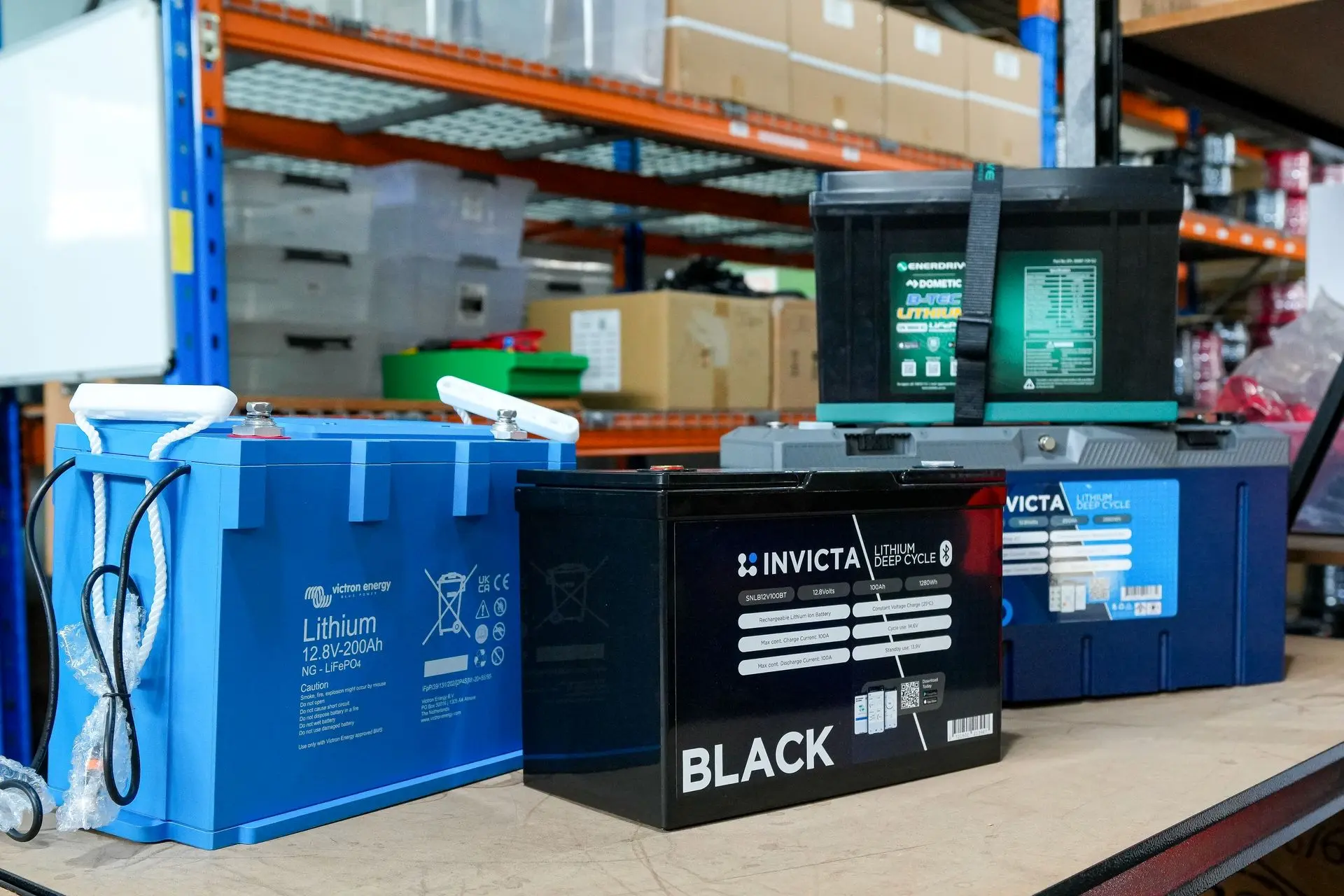
Let’s start with your battery bank. When you’re choosing new batteries, there are a few important things to check before investing. Whether you’re going for lithium or AGM, your new batteries should be series compatible, correctly balanced and protected by a quality BMS.
Read More: A Guide on Auxiliary Batteries
Next, have a look at your solar components. Your solar regulator is the most important component to consider here, as it handles the energy generated by your solar array. Your solar regulator needs to handle the new battery voltage, or you’ll have to connect it to a DC-DC converter.
If your solar array is already optimised and fairly new, the cheapest option is to connect a DC-DC converter between your solar components and battery. Though if you have the budget, or are considering upgrading your solar in this process, you’ll need to ensure your new solar regulator is compatible with your battery voltage.
Read More: Solar Charge Controllers Explained

Next, you can take a look at your inverter and charger setup. Your inverter must match the system’s voltage exactly, so you can’t simply reuse a 12V inverter in a 24V or 48V system.
When it comes to your DC chargers, the same applies. It must match the system’s voltage exactly, otherwise your system won’t run, and your components become a safety risk.
Read More: DC-DC Chargers

Finally, check your loads. Here, look to identify if you have any appliances that will still need 12V energy, as these will still need the correct voltage supply. Once you know what these loads are, ensure you have the correct DC converter to supply the loads with the voltage they need.
Mistakes to avoid when designing your upgrade
The biggest mistakes we see when people are upgrading their systems are:
- Undersized cabling
- Ignoring charging sources
- Poor load separation
- No future-prepping

When it comes to cables, they have to be sized correctly - there is no room for interpretation. Sometimes, people assume that a higher voltage means old cables are automatically fine, but this isn’t always the case. Your cable size still depends on:
- Load
- Run length
- Acceptable voltage drop
- Charging current
You need to ensure the cable that you have is going to be suitable for the components you’re running, and specifically, the voltages you’re running in the system.
Our latest content
Check out what's new in our company !
Ignoring one or more of the charging sources is something we see happen a bit. You need to consider all possible charging sources when looking to upgrade.
Obviously, you’ll have considered your battery, but you also need to ensure that your vehicle’s alternator, your solar input and any 240V charger all work together in one cohesive system - otherwise you risk damaging your components.
Another thing that can’t be missed is any of your voltage-sensitive appliances. These appliances clean, regulated voltage. So when upgrading your system, consider that these appliances need to maintain their stable 12V supply, meaning you’ll likely need to upgrade your DC-DC converter to the higher input voltage.

Finally, an issue that we see a lot and we would caution against is not allowing room for future scalability. If you’re taking the time to upgrade your system and have a very real possibility of that system needing expansions in the future, you should be leaving space for that. You should consider the following in your design:
- Ability to add more batteries
- Ability to add more solar
- Increased inverter loads
- Adding future accessories
That’s why system design matters just as much as component choice.

If your 12V setup is reaching its limits, upgrading to 24V or 48V can completely transform how long and how comfortably you can stay off-grid. But the key is designing the system around how you actually travel in Australia. Your appliances, solar harvest, and charging sources all need to work together to build a comprehensive system that we power your travels, no matter how remote you go.
Springers Solar | Your Trusted 12V/24V Components & Accessories Supplier
We only stock the best brands in the extra-low voltage industry for the best prices - you can trust that when you buy gear from Springers, you are setting up your system to perform long-term. We don't waste our time or your time with low-quality products.
With an in-house team of 12V/24V experts, we can offer advice and support as you set up your off-grid, off-road, or DIY battery system. We are Queensland-based and house our stock, so check out our online store here or visit us at Lawnton, Warana or Capalaba for in-store help.
How to Upgrade Your System’s Voltage